Minimalist Skincare Guide

Building a considered skincare routine

When your bathroom shelf holds fewer bottles, it becomes much easier to notice what actually agrees with your skin. Here is how to evaluate each step by its physiological role rather than marketing trends.

Start with the skin barrier, not a list of flaws

Much of modern beauty advertising encourages people to categorize their skin by perceived problems—pores, shine, fine lines, or occasional blemishes—and to buy a separate bottle for each. In dermatological practice across Scandinavia, the starting point is much simpler: support the stratum corneum first, and address specific concerns only after the barrier is calm.

The outer layer of your skin is structured like a wall of flattened protein cells (corneocytes) held together by a lipid matrix of ceramides, cholesterol, and free fatty acids. Furthermore, the surface maintains a slightly acidic pH—typically between 4.5 and 5.5—known as the acid mantle. When alkaline soaps, high-percentage acid toners, or physical scrubs disrupt that balance day after day, the skin loses water faster and becomes reactive to even gentle products.

Nordic minimalism is not about striving for an unattainable "glass skin" ideal. It is a practical philosophy shaped by long winters and outdoor living: protect the barrier, avoid unnecessary sensitizers, and let your skin perform its normal self-renewal without interference.

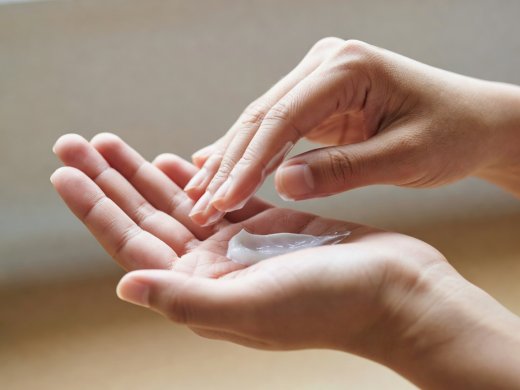
Close-up of hands warming a small amount of unbranded moisturizer in soft natural daylight

The Two-Week Reset Principle

If your skin stings when you apply plain moisturizer, pause all exfoliants, retinoids, and vitamin C serums for 14 days. Use only a mild non-foaming cleanser, a fragrance-free barrier cream, and daytime sunscreen.

Step 1: Cleansing that respects surface lipids

Cleansing has one straightforward job: lifting away oxidized sebum, environmental particulate matter, and water-resistant sunscreen filters so they do not sit on the skin overnight. It does not need to leave your face feeling squeaky clean—that tight sensation is a sign that surfactants have bound to your skin's own structural proteins and lipids.

Look for cleansers formulated with mild amphoteric or non-ionic surfactants such as coco-glucoside, decyl glucoside, or sodium cocoyl isethionate, paired with glycerin. In the morning, unless your skin produces heavy overnight oil, rinsing with lukewarm water at the sink is sufficient before applying daytime protection.

If you wear heavy water-resistant sunscreen or makeup, a brief first pass with a simple emulsifying oil cleanser or micellar water loosens film formers without requiring vigorous rubbing with cotton pads.

Step 2: Moisturizing across three mechanisms

Every well-rounded moisturizer combines three classes of ingredients in varying proportions depending on how rich the texture feels:

  • Humectants (glycerin, urea, hyaluronic acid, panthenol) attract and hold water molecules inside the upper layers of the epidermis.
  • Emollients (squalane, caprylic/capric triglyceride, canola oil, oat kernel oil, cetearyl alcohol) fill in microscopic rough spaces between desquamating skin cells, softening texture.
  • Occlusives (petrolatum, shea butter, dimethicone, beeswax) form a breathable physical film on the surface that slows down evaporation into dry indoor air.

Applying your moisturizer within a couple of minutes of patting your skin dry traps surface hydration effectively, eliminating the need for separate hydrating mists or watery essences.

Step 3: Context-aware sun protection

In northern latitudes, ultraviolet radiation varies dramatically across the year. From November through February in much of Scandinavia, the midday UV index sits near 0 or 1, whereas from April through August—or during alpine skiing trips—UV exposure is significant and prolonged by long daylight hours.

Using the daily UV index as your guide keeps sunscreen habits practical. Whenever the index reaches 3 or higher, or if you use photosensitizing actives like alpha-hydroxy acids or retinoids, apply a broad-spectrum SPF 30 or 50 generously. Modern European chemical filters (such as bis-ethylhexyloxyphenol methoxyphenyl triazine and diethylamino hydroxybenzoyl hexyl benzoate) offer high UVA protection in comfortable lotion bases that double as your morning moisturizer.

Step 4: Adding a single targeted active

Once cleansing, moisturizing, and sun protection feel comfortable for at least a month, you can decide if your skin actually needs a fourth bottle. Introduce only one targeted treatment at a time, and give it six to eight weeks before judging results:

  • For uneven tone or redness: Azelaic acid (10%) or niacinamide (4%–5%) calms visible redness and supports barrier synthesis without peeling.
  • For clogged pores or texture: Salicylic acid (BHA, 1%–2%) twice a week dissolves oil-soluble debris inside pores gently.
  • For photoaging support: A low-strength retinol (0.1%–0.3%) or retinaldehyde applied two or three evenings a week over moisturizer encourages steady cellular turnover.
Check ingredient compatibility

Comparing morning and evening routines by skin state

Use this reference table to keep your daily steps proportionate to how your skin feels right now.

Skin State Morning Routine (2–3 Steps) Evening Routine (2–3 Steps) What to Skip
Dry & Tight Water rinse → Rich ceramide cream → Moisturizing SPF 30+ Cream cleanser → Rich barrier balm or ointment on dry patches Foaming gels, clay masks, daily glycolic acid toners
Balanced / Combination Water rinse → Lightweight lotion or moisturizing SPF 30+ Mild gel cleanser → Medium-weight glycerin & squalane cream Pore-stripping astringents, multi-step essence layering
Oily & Blemish-Prone Mild gel wash → Fluid SPF 30+ (acts as moisturizer) Mild gel wash → Salicylic acid or azelaic acid → Oil-free gel-cream Harsh physical walnut scrubs, alcohol-based drying lotions
Sensitized / Reactive Lukewarm water splash → Fragrance-free panthenol cream → Mineral or gentle hybrid SPF Milk cleanser → Pure barrier cream with minimal ingredients Essential oils, fragrance, retinoids until stinging resolves