Practical Personal Care

Modern grooming with fewer steps

Grooming does not require separate aisles of heavily scented bottles or complicated gadgets. Whether you shave your face or legs, maintain facial hair, or care for weather-worn hands, good technique and clean tools do most of the work.

Low-friction shaving for any area of skin

Every time a blade passes across skin, it clips hair fibers while also skimming the top layer of corneocytes. Razor burn, red bumps (pseudofolliculitis barbae), and post-shave stinging happen when dull blades tug at dry hair or when multi-blade cartridges cut hair below the level of the epidermis.

By slowing down slightly and softening the hair keratin with warm water first, you reduce the cutting force needed by more than half:

  1. 1
    Hydrate the hair for two to three minutes. Shave at the end of a warm shower or after holding a warm, damp washcloth over the area. Dry hair is nearly as tough to cut as copper wire of the same thickness; hydrated hair yields smoothly.
  2. 2
    Choose slip over foam volume. Canned aerosol foams are often packed with propellant gases and drying soaps that look fluffy but offer little lubrication. A thin, slick layer of fragrance-free shave cream or emulsifying oil cushions the blade and lets you see hair growth direction.
  3. 3
    Glide with the grain using minimal pressure. Let the weight of a clean, sharp razor do the work in short strokes, rinsing the blade frequently. Follow with cool water and a soothing panthenol or glycerin lotion—never high-alcohol splash.
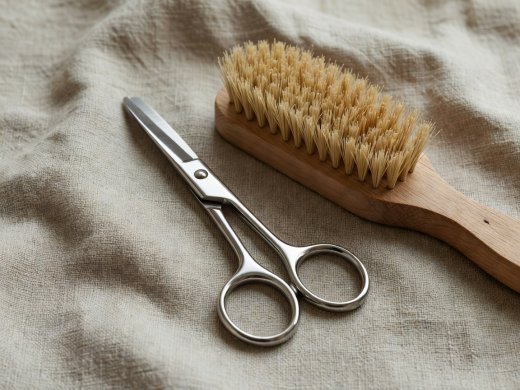
Close-up of stainless steel grooming scissors and a natural bristle nail brush on unbleached linen

Well-maintained stainless steel tools last for decades when rinsed and dried after use.

Caring for skin beneath facial hair

Beard and stubble itch is rarely a hair problem—it is almost always dry or flaking skin trapped underneath dense hair fibers. Coarse facial hair wicks natural moisture away from the skin surface and makes it harder for thick creams to reach the epidermis.

When washing your face, work a mild facial cleanser all the way down to the skin beneath your beard and rinse thoroughly so no surfactant residue dries there. While the hair is still slightly damp, massage two or three drops of a lightweight, non-comedogenic oil (such as pure squalane or jojoba oil) or a fluid moisturizer directly onto the skin beneath the hair, then comb through with a clean wide-tooth comb.

If persistent flaking occurs in the mustache or eyebrow area, a gentle wash containing piroctone olamine twice a week keeps scalp-type flaking in check.

Hands, cuticles, and body skin in cold climates

Hands are washed many times a day and exposed to wind, cycling commutes, and dry indoor air long before other areas show signs of wear. Once small fissures crack around the knuckles or fingertips, simple tasks become uncomfortable.

Keep a fragrance-free hand cream with 5% urea and glycerin next to the sink. Rather than cutting living cuticle tissue—which acts as a protective seal against bacteria and yeast around the nail matrix—gently push softened cuticles back with a damp towel after showering and apply a drop of plain oil or petrolatum ointment before bed.

For body care, limit soap or body wash to areas with apocrine sweat glands and daily grime (underarms, groin, feet) during winter months, letting warm water rinse dry shins and forearms before applying body lotion onto damp skin.

Grooming tool maintenance & replacement schedule

Clean tools prevent bacterial folliculitis and ensure blades cut cleanly without pulling.

Grooming Tool After Every Use Weekly / Monthly Care When to Replace
Safety Razor Blade Rinse under hot tap water; shake off excess droplets and air-dry outside closed cabinets Wipe razor handle and head with 70% isopropyl alcohol when changing blades Every 5 to 7 shaves (recycle used steel blades in a blade bank)
Cartridge Razor Rinse thoroughly from back to front; never tap blade edges against porcelain sinks Soak briefly in rubbing alcohol if buildup collects between blades Every 5 to 8 shaves or at the first sign of tugging
Electric Trimmer Brush away clipped hairs with small cleaning brush Apply 1 drop of light machine oil across moving teeth to prevent heat friction Replace trimmer foil or cutter block every 12 to 18 months
Tweezers & Nail Clippers Wipe tips clean with tissue or alcohol pad Wash with warm soapy water and dry completely Lasts years; resharpen or replace only if tips lose alignment
Read common care answers